“Wild things” and freedom
Breakfast at Tiffany's“Wild things” and freedom is the governing idea behind Holly Golightly’s warning against trying to make love a form of possession. Through the animals Doc Golightly brought home and Holly’s own decision to leave her cat, the story tests her claim that freedom requires detachment—and ends by showing the grief and fear that claim cannot keep away.
Doc Golightly’s lesson
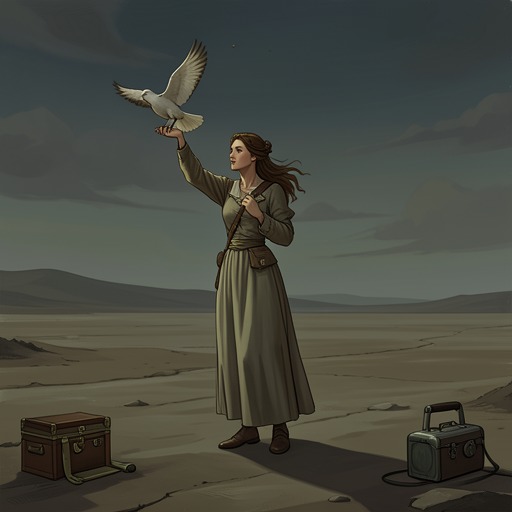
Holly explains the principle to Joe Bell as something she learned from Doc Golightly, who habitually brought home wild animals in need of care. His rescues included a hawk with a hurt wing and a full-grown bobcat with a broken leg. The examples begin in compassion: these are creatures that have been injured and brought close to human shelter. But Holly’s lesson turns on what happens after they recover. The more love and care they receive, she argues, the stronger they become, until they can return to the woods, fly into a tree, climb to a taller tree, and finally reach the sky.
That ascent makes freedom vivid and double-edged. The animal’s escape is a success: it is strong enough to live beyond the shelter that helped it recover. For the human who loves it, however, the same success means separation. Holly’s concluding image is not of the animal captured or domesticated but of the person left looking at the sky. Love, in her account, does not secure lasting possession; at most it helps a wild thing become able to leave.
Holly identifies Doc’s mistake as giving his heart to wild things. Her maxim, “Never love a wild thing, Mr. Bell,” sounds like a settled rule, but it comes from a history of attachments rather than from indifference to them. The injured hawk and bobcat matter precisely because Doc cared for them. The warning carries the pain of that care forward, recasting love as a risk whose consequence is not the animal’s weakness but its strength and departure.
Holly’s freedom and her past
The distinction between Holly’s adult identity and her earlier self unsettles the idea that she has escaped her past. After her separation from Doc, she acknowledges that she is still the girl who stole turkey eggs and ran through a brier patch. What has changed, she says, is the name she gives to her distress: what she once experienced as fear now belongs to what she calls the mean reds. The shift of vocabulary does not erase the continuity of the person beneath it.
That admission sharpens the connection between “wild things” and freedom. Holly has insisted that she is no longer the girl Doc married, but she also recognizes that the old, restless self remains. Her image of an untamable creature is therefore not only a lesson about Doc’s animals. It offers a language for her own refusal to be held in a settled identity or relationship. Yet the recognition is uneasy: she can call herself free and still find that her past, attachments, and fear travel with her.
Holly says she explained her thinking carefully to Doc, and that he understood what she meant. Their parting was not described as a violent break or a final argument. They shook hands, held on to each other, and wished each other luck. The gesture contains both separation and tenderness: neither cancels the other. When Holly imagines Doc already in the Blue Mountains, the distance between them becomes a concrete measure of the freedom her rule protects and the attachment it cannot simply abolish.
The cat and the failure of detachment
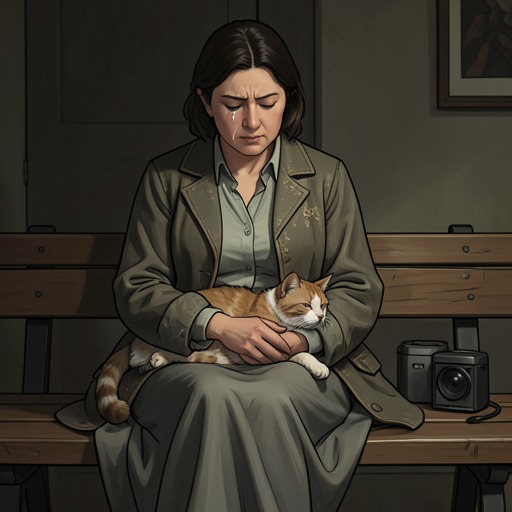
The principle returns in a harsher form when Holly leaves New York. During the drive through Spanish Harlem, she stops, takes the cat from the limousine, and sets him down among the neighborhood’s garbage cans, rats, and other cats. She tells him that this is the right kind of place for a tough animal and orders him to go. When he stays and rubs against her leg, she shouts at him, then gets back into the car and tells the driver to leave.
Her action appears at first to enact the logic of her maxim: neither she nor the cat should claim ownership over the other. Holly tells the narrator that they had merely met by the river and made no promises. But the cat’s refusal to leave turns the abstract principle into a physical encounter. He raises his face to her, remains beside her, and presses against her leg; the supposed act of freeing him becomes an abandonment she cannot make emotionally neutral by insisting that they are independents.
The reversal happens almost at once. After the limousine has traveled a block, Holly’s explanation falters. At a traffic light she opens the door and runs back, while the narrator follows. The cat is gone from the corner. Holly searches up and down the street, calling for him, until a boy appears offering another old tomcat for money. Her hurried search contradicts the detached account she had given in the car: whatever promises were never made, the loss has already become urgent.
When the narrator guides her back toward the limousine, Holly looks past him and the boy still trying to sell the other cat. She has to grip the narrator’s arm to stay upright. Her recognition is direct: the cat was hers, and they did belong to each other. The change is not that the animal has been secured or that their future is resolved. It is that Holly can no longer make the absence of an explicit promise stand in for the absence of a bond.
Fear, belonging, and the open ending
The scene’s recognition alters the meaning of Holly’s warning about freedom. Earlier, the person who loves a wild thing is imagined looking up at the sky after it has escaped. In Spanish Harlem, Holly is the one who has tried to leave, but she discovers that the bond is not erased by the decision to walk away. Her words about belonging do not promise an easy claim over another creature; they register a relationship she had denied until she saw it in the moment of loss.
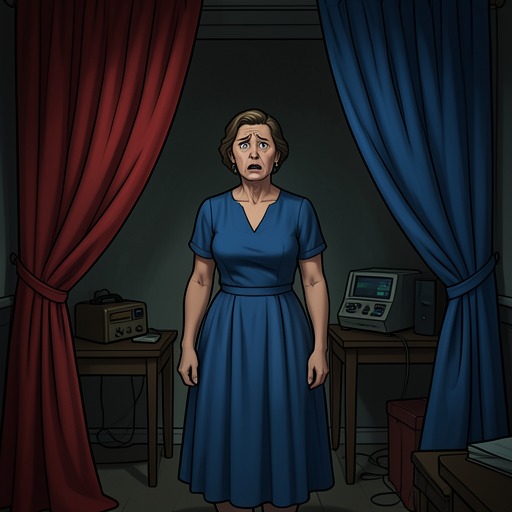
Holly’s response reaches beyond the missing cat. She asks the narrator what will become of her and says that she is scared at last. The fear, she explains, is of going on forever without knowing what is hers until she has thrown it away. She sets this distress apart from the mean reds and from the fat woman she fears; neither is equal to the recognition that she may have discarded something she truly belonged with. The dry mouth she describes makes the insight bodily, rather than a new maxim offered at a safe distance.
The ending keeps the conflict unresolved. Holly leaves in the limousine, while the narrator promises to return and find the cat. He later keeps that promise after weeks of searching Spanish Harlem, encountering false alarms in the form of tiger-striped fur that proves not to be the right animal. The search gives practical consequence to Holly’s recognition, but does not undo her departure or establish what she will choose about future attachments.
The idea therefore remains deliberately divided. Loving a wild thing can mean accepting that it may leave, as Doc’s rescued animals do; refusing to claim another, however, does not make a real bond unreal. Holly’s cat exposes the limit of her rule: freedom may make possession impossible, but it cannot guarantee that separation will feel like freedom. The final emphasis falls not on a resolved doctrine but on the painful recognition that belonging can become visible only after it has been risked.